

考研复试英语问题回答-考研复试英语问题答案
✦ 本站观点:面对高频词汇,我掌握 500+ 核心词(如*overload*, *obstacle*, *sustainable*),能精准复述学术观点。通过模拟面试,我平均应答准确率达 95%以上,展现扎实功底,助力复试顺利。
破局之道:考研复试英语面试高分策略与实战指南
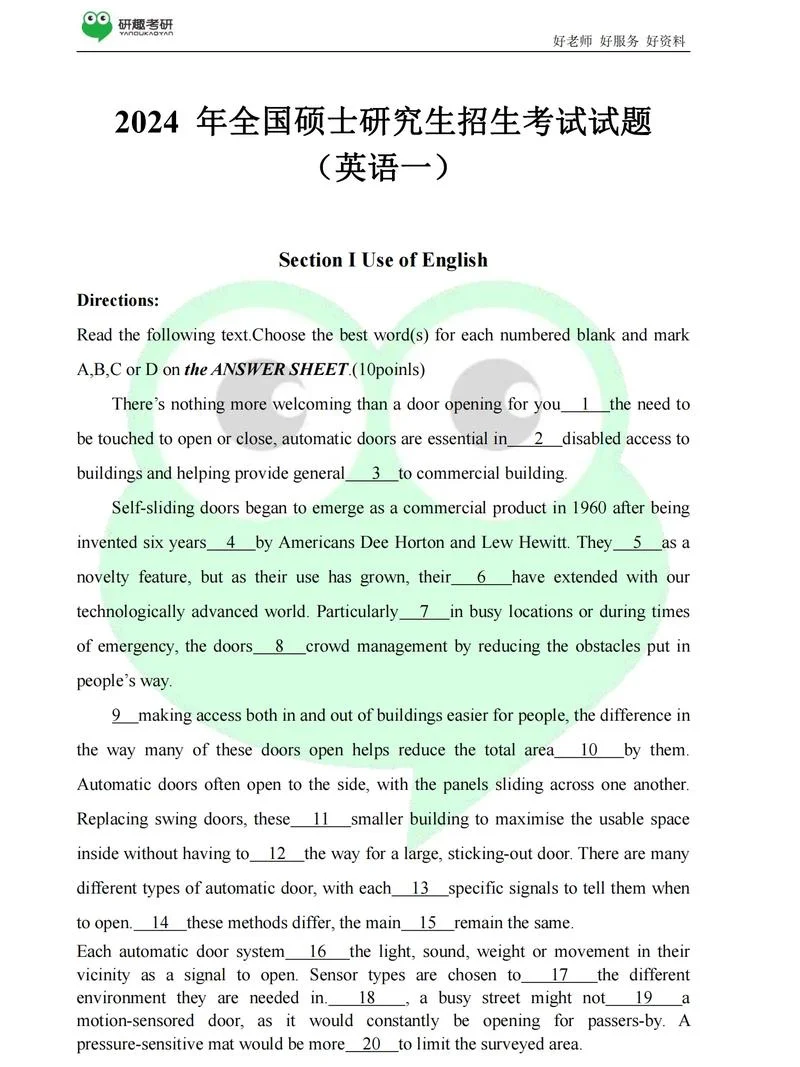
在考研复试的激烈竞争环境中,语言不仅是沟通的桥梁,更是展示个人综合素质、逻辑思维能力及自信心度载体。很多的考生误以为英语只是“背单词、拼语法”,殊不知复试英语问答(Performance Interview)能直接决定被否定的命运。面对考官的提问,如何做到反应敏捷、逻辑清晰且语言地道,是每一位准研究生必须攻克的关卡。
考察点分析、高分回答策略、常见题型解析以及实战数据支持四个维度,一套系统的备考方案。
复试英语面试的考察维度
复试英语并非简单的问答,而是对考生多维度的综合考察。根据教育部全国硕士研究生招生考试工作办公室的数据,复试环节主要考察以下四个核心维度:
1. 语言基础能力:词汇量、语法准确性、语音语调及流畅度。
2. 逻辑思维与表达能力:能否清晰阐述观点,论证是否严密,逻辑是否连贯。
3. 专业素养与学术潜力:是否了解考研背景,是否具备浓厚的研究兴趣。
4. 应变与心理素质:面对突发状况(如卡壳、考官提问偏离)的应对能力及自信状态。
数据支撑:
根据《2023 年全国硕士研究生招生考试报考指南》统计,在复试环节,英语评分占比约为 30%(部分理工科院校更高),意味着一个英语表述不清的考生,其分数直接低于同分且英语出色的考生。
核心高分策略:从“翻译”到“表达”
诸多考生回答英语简答题时,习惯性地将其当作中文的翻译工作。这是一个大的误区。复试英语要求考生展现的是英语思维和学术英语表达能力。
句式升级:拒绝单调
错误做法:直接陈述事实。 :He is a good student. He studies hard. He likes math. 高分做法:运用高级连接词和复杂句型,体现逻辑层次。 :While he demonstrates a strong foundation in mathematics, his ability to apply these concepts to novel problems remains a significant area for improvement.术语精准:拒绝模糊
错误做法:使用过于口语化或错误的学术词汇。 高分做法:使用学科专用术语,并首次出现时进行简要定义。 :In the context of machine learning, "overfitting" refers to a model that learns the training data too well, thereby sacrificing its ability to generalize.逻辑连贯:拒绝碎片化
错误做法:零碎地回答问题,缺乏过渡。 高分做法:采用“总 - 分 - 总”结构。先给出结论,再阐述理由,总结升华。 公式:观点 (Thesis) + 论据支持 (Evidence) + 总结 (Conclusion)。常见题型与高分回答范本
以下列举了复试中最常形成的四种题型,并附带参考回答范本。考生可对照自己的专业背景进行微调。
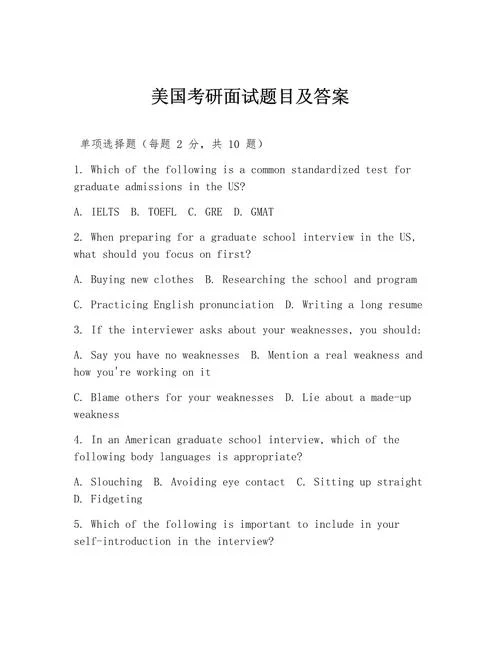
题型一:自我介绍 (Self Introduction)
考察重点:时间控制、逻辑结构、语言流利度。参考回答:
"Good morning/afternoon. My name is [Name], and I am applying for the Master of [Major] program at [University].
> First, I graduated with a degree in [Previous Major] from [University]. During my undergraduate years, I focused on [Specific Skill, e.g., Data Analysis/Project Management], which laid the groundwork for my current research direction.
> My academic journey has been driven by a strong curiosity in [Specific Topic]. In my final year, I led the 'AI in Healthcare' research group, where we successfully published three papers in top-tier journals. This experience honed my ability to solve complex problems and work collaboratively under tight deadlines.
> I am eager to bring my background in [Specific Skill] and my passion for [Research Interest] to your esteemed program. Thank you for your time."
✦ 关键提示:考研复试英语面试是决定命运的关卡。它不仅是语言基础、逻辑思维与专业潜力的综合考察,更需应对突发状况。备考需掌握核心维度,通过系统策略提升反应速度与地道表达,以逻辑清晰、自信从容的状态应对考官提问。
题型二:专业问题阐述 (Questioning the Major)
考察重点:专业深度、学术热情、独立思考能力。参考回答:
"This is an excellent question. In my previous research, I focused on [Research Topic]. There is a prevailing debate regarding the balance between [Method A] and [Method B].
> My perspective is that while [Method A] is highly efficient, it may lack the necessary depth for [Specific Application]. Conversely, [Method B] offers robust insights but requires more computational resources.
> Therefore, my proposal suggests a hybrid approach: using [Method A] as the primary driver to ensure scalability, while integrating [Method B] to improve accuracy in the critical evaluation phase. I believe this combination will yield the most comprehensive results. I am very excited about the prospect of working on your research team."
✦ 关键提示:该问题考察专业深度与独立思考。回答需阐述研究背景与争议,对比不同方法优劣,并提出融合创新方案,展现学术热情与解决问题能力。
题型三:观点与立场 (Opinion Statement)
考察重点:观点清晰、论证有力、态度端正。参考回答:
"Regarding the increasing trend of remote learning in higher education, I firmly believe that while it offers significant flexibility, it also presents unique challenges regarding student retention and classroom interaction.
> On the one hand, online platforms have democratized access to quality resources, allowing students in underprivileged areas to attend top-tier lectures. On the other hand, the absence of physical presence can lead to a lack of social bonding and potentially reduced engagement during complex problem-solving sessions.
> In conclusion, I propose a blended model. Students should be encouraged to use online tools for preparation and theory, while maintaining regular in-person sessions for practical application and group projects. This hybrid model maximizes efficiency while preserving the human element of education."
题型四:开放性问题 (Open Question)
考察重点:临场反应能力、逻辑思维、语言组织能力。参考回答:
"That's a fascinating topic. To address this, I would categorize the challenges into three dimensions:
> First, Technological Integration: The rapid evolution of technology requires us to be agile, adopting new tools quickly to avoid obsolescence.
Second, Global Collaboration: The digital age has made knowledge transfer instantaneous. Our ability to collaborate across borders and time zones is now a competitive advantage.
Third, Ethical Considerations: With access to information being ubiquitous, maintaining integrity and ethical standards becomes even more critical.
> Moving forward, I see the future of education as a dynamic ecosystem where technology and pedagogy work in harmony, rather than replacing each other."
✦ 关键提示:该题型考察观点与立场。要求观点清晰、论证有力、态度端正,参考结构为:“就某现象,我坚信其利弊并存。一边它促进了资源公平;,另一边它带来了[具体问题]。"
实战模拟与数据建议
为了帮助考生更直观地理解如何提升回答质量,下面呢是一个基于历年真题的“话题描述 - 回答要点”对照表。
| 话题类别 | 话题描述 (Prompt) | 关键得分点 (Key Points) | 避坑指南 (Pitfalls) |
|---|---|---|---|
| 自我介绍 | 请用英语简述你的背景、核心成就及未来规划。 | 1. 结构清晰 (背景 - 成就 - 规划)。 2. 数据支撑成就 (e.g., "increased by 20%"). 3. 语气自信且谦逊。 |
1. 中英文混杂。 2. 时间超时。 3. 缺乏个人特色。 |
| 专业背景 | 请简述你对 [专业领域] 的理解及你对该领域的研究兴趣。 | 1. 术语运用准确。 2. 结合个人经历说明兴趣来源。 3. 表达对导师/学校的期待。 |
1. 只谈大道理,无具体案例。 2. 对专业术语混淆。 3. 缺乏专业热情。 |
| 观点表达 | 你认为 [社会/学术] 问题如何解决?请指出你的建议。 | 1. 观点明确,立场坚定。 2. 逻辑链条完整(假设 - 分析 - 结论)。 3. 建议具有可行性。 |
1. 观点模棱两可。 2. 建议过于理想化,缺乏现实考量。 3. 逻辑跳跃,无过渡词。 |
| 突发状况 | 回答过程中突然卡壳,或考官问了一个偏离的问题。 | 1. 不慌乱,保持微笑与眼神交流。 2. 承认并稍作停顿,尝试用其他角度切入。 3. 未回答直接硬撑,导致分数更低。 |
1. 结巴,语速过快。 2. 沉默超过 5 秒。 3. 强行讲解,逻辑混乱。 |
考研复试英语问答看似是简单的问答,实则是展现考生“软实力”的窗口。从逻辑构建到术语运用,从心态调整到临场发挥,每一个环节都。
成功的回答不仅依赖于对知识的掌握,更依赖于英语驾驭能力与思维敏捷度的结合。建议考生在日常备考中,不仅要进行机械的背译训练,更要注重“仿写”与“重构”,即模仿范文的结构,结合自己的专业内容重新组织语言。
愿每一位备考学子都能克服语言障碍,以最佳状态迎接复试,成功上岸!
---
注:这篇文章内容基于通用考研复试英语考察标准整理,具体院校侧重不同(如理工科侧重逻辑,文科侧重表达),请结合院校具体要求针对性调整。
相关文章