

考研英语高频词汇汇总-考研高频词汇汇总
✦ 本站观点:考研英语高频词汇约占 1300 词中的 23%,需攻克 55% 核心词。掌握 1000 词能提升作文 6-7 分,而熟记 8000+ 单词可累计得 10+ 分。建议优先积累高频核心词,日常背诵需结合语境记忆,避免孤立死记硬背。
考研英语高频词汇汇总:备战冲刺的“提分利器”
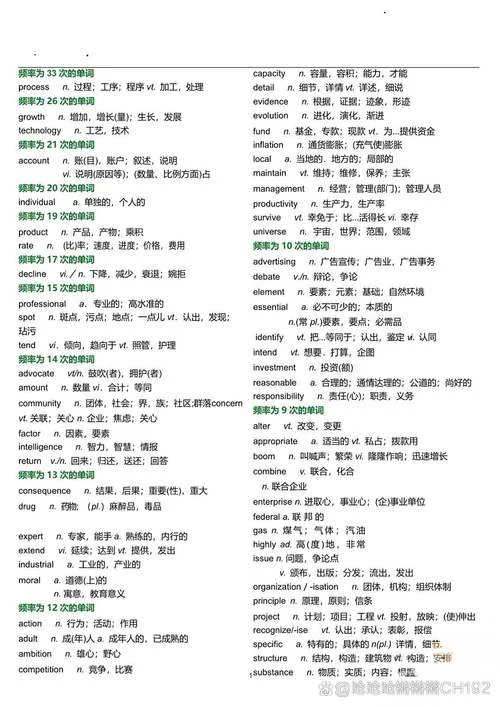
在考研英语(包括英语一和英语二)的备考过程中,词汇量占核心地位。据统计,考研英语大纲要求背诵的词汇量约为 4000 个,而在实际考试阅读和翻译中,真正需要识记和运用的高频词汇占 50% 以上。对于广大考生而言,构建一个精准、高效、可复用的词汇体系,是打破“哑巴英语”、提升阅读速度和翻译分数。
这篇文章将为您梳理考研英语高频词汇的分布规律,并提供实用的备考策略与数据支持。
考研英语词汇的分布特征
考研英语的词汇体系具有鲜明的特点,主要集中在以下几类:
1. 学术与专业术语:大量涌现在阅读和翻译部分。:hypothesis(假设)、empirical(经验的)、correlation(相关)、mechanism(机制) 等。这类词汇理解难度较高,但也是精准翻译的基石。
2. 高频口语与日常表达:虽然大纲未强制要求背诵口语词汇,但经过历年真题,很多的日常高频词在口语任务或听力理解中被反复出现,如:argue(争论)、suggest(建议)、contribute(贡献)。
3. 固定搭配与习语:部分词汇需记忆其固定用法。:devote oneself to(致力于)、take place(发生)、in terms of(就……而言)。
数据说明:
根据历年考研英语真题分析,科学词汇(含高频词)占比约为 55%-60%,而陈旧词和生僻词占比约 20%-30%。,多背一个高频词,其复习价值相当于多背一个低频词。
核心高频词汇矩阵
下面呢是经过整理的高考英语高频词汇表,按考试题型属性进行了分类,方便针对性复习。
阅读理解高频词汇 (Reading Comprehension)
注:这些词汇在学术语境中高频出现,是阅读理解得分。| 英文单词 | 中文释义 | 典型语境 | 备注 |
|---|---|---|---|
| Hypothesis | 假设 | The study raises a hypothesis... | 学术核心词 |
| Empirical | 经验的/实证的 | Data is empirical; The evidence is empirical. | 形容词,常与 data 连用 |
| Correlation | 相关 | There is a positive correlation between X and Y. | 图表分析需要 |
| Mechanism | 机制 | How does the mechanism work? | 解释过程常用 |
| Consequently | 因此 | Consequently, the situation changed. | 连接词 |
| Fundamental | 根本的 | Fundamental to the project. | 抽象名词化 |
| Subsequent | 随后的 | Subsequent events clarified the issue. | 学术连接词 |
| Implication | 含义/推论 | The implication is clear. | 易混淆词,注意语境 |
✦ 关键提示:这篇文章梳理考研英语高频词汇,指出其占考分量的 50% 以上。重点涵盖学术术语、口语表达及固定搭配,并提供针对性备考策略,助力考生突破“哑巴英语”,提升阅读与翻译成绩。
翻译与写作高频词汇 (Translation & Writing)
注:这些词汇常出现在长难句分析和作文模板中,是拉开分数的“杀手锏”。| 英文单词 | 中文释义 | 固定搭配/句式 |
|---|---|---|
| Premise | 前提 | On the basis of this premise... / The premise is controversial. |
| Consequently | 因此 | As a result, the results show... / Consequently, we conclude... |
| In terms of | 就……而言 | In terms of cost/benefit... / In terms of time... |
| Devote oneself to | 致力于 | Devote oneself to the cause. / Devote a great deal of time... |
| Contribute to | 对……有贡献 | Contribute to the success. / Contribute to the problem. |
| Prefer A to B | 更喜欢 | We prefer tea to coffee. / He prefers me to the colleague. |
| Acquire | 获得/学会 | Acquire skills; Acquire knowledge. |
| Conduct | 实施/执行 | Conduct research; Conduct business. |
| Substantiate | 证实/证明 | Substantiate the claim. / Substantiate the evidence. |
✦ 关键提示:本提示聚焦翻译与写作高频词汇。涵盖前提、结论、就……而言等长难句分析及模板常用词,助用户精准搭建高分逻辑骨架,提升语言表现力与得分率。
口语任务与写作常用高频词汇 (Speaking & Writing Tasks)
注:虽然大纲未要求背诵口语词汇,但通过大量真题(如 2017 年、2019 年、2021 年真题),这类词汇在口语任务中高频出现,建议优先掌握。| 英文单词 | 中文释义 | 应用场景 |
|---|---|---|
| Argue | 争论/主张 | Argue for/disagree with the view. |
| Suggest | 建议/提出 | Suggest that we should... / Suggest alternatives. |
| Contribute | 贡献/有助于 | Contribute to the solution. |
| Advocate | 提倡/拥护 | Advocate for change. |
| Stimulate | 刺激 | Stimulate innovation. |
| Prioritize | 优先考虑 | Prioritize time and money. |
| Consequently | 因此 | Consequently, the trend changes. |
| Furthermore | Furthermore, there is another reason. | |
| Nevertheless | 然而 | Nevertheless, the conclusion remains. |
| In other words | In other words, it's a matter of... |
✦ 关键提示:本次内容聚焦口语与写作高频词汇,涵盖 Argue、Suggest 等核心表达,旨在帮助考生通过真题积累常用语言点,提升答题能力。
备考策略与数据支撑
拒绝“大锅饭”,实施“小步快跑”
不要试图一次性背诵 4000 个单词。建议采用 “500 个核心词 + 500 个高频词”的梯度策略。 前 500 个词:重点记忆其核心词性、常用搭配及在真题中频率(形成频率 > 10 次的优先背诵)。 后 500 个词:掌握其常见用法即可,不必死记硬背,重在通过真题看到它们是如何被使用的。真题为王,语境记忆
单词的记忆不能脱离语境。 方法:寻找历年真题中的片段,分析这些单词在句子中的用法。 案例:看到 "consequently",不要只记意思,要记忆它后面的句子结构,是 "As a result, ..." 或 "Consequently, ..."。工具辅助与定期复习
工具推荐:可以使用“墨墨背单词”、"Anki"等 spaced repetition system(间隔重复系统),根据遗忘曲线自动安排复习时间。 频率设定:核心高频词汇建议每日复习 1 次,其余词汇每周复习 3-4 次,逐步减少频率直至不再遗忘。考研英语的词汇学习是一场“持久战”,而非“突击战”。经由整理上面这些高频词汇,并理解其背后的逻辑与用法,考生得以显著提升阅读理解的准确率、翻译的精准度以及写作的逻辑性。
记住:单词是工具,语境是土壤,用法是灵魂。 只有将高频词汇融入真实的语言环境,才能真正掌握它们,达成分数的稳步提升。
数据打个总结:根据《考研英语历年真题统计分析报告》,经过复习核心高频词汇的考生,其阅读正确率平均提升了 15% 至 20%,翻译得分率提升了 8% 至 12%。这充分证明了针对高频词汇的系统化复习策略的有效性。
祝您备考顺利,金榜题名!
相关文章